
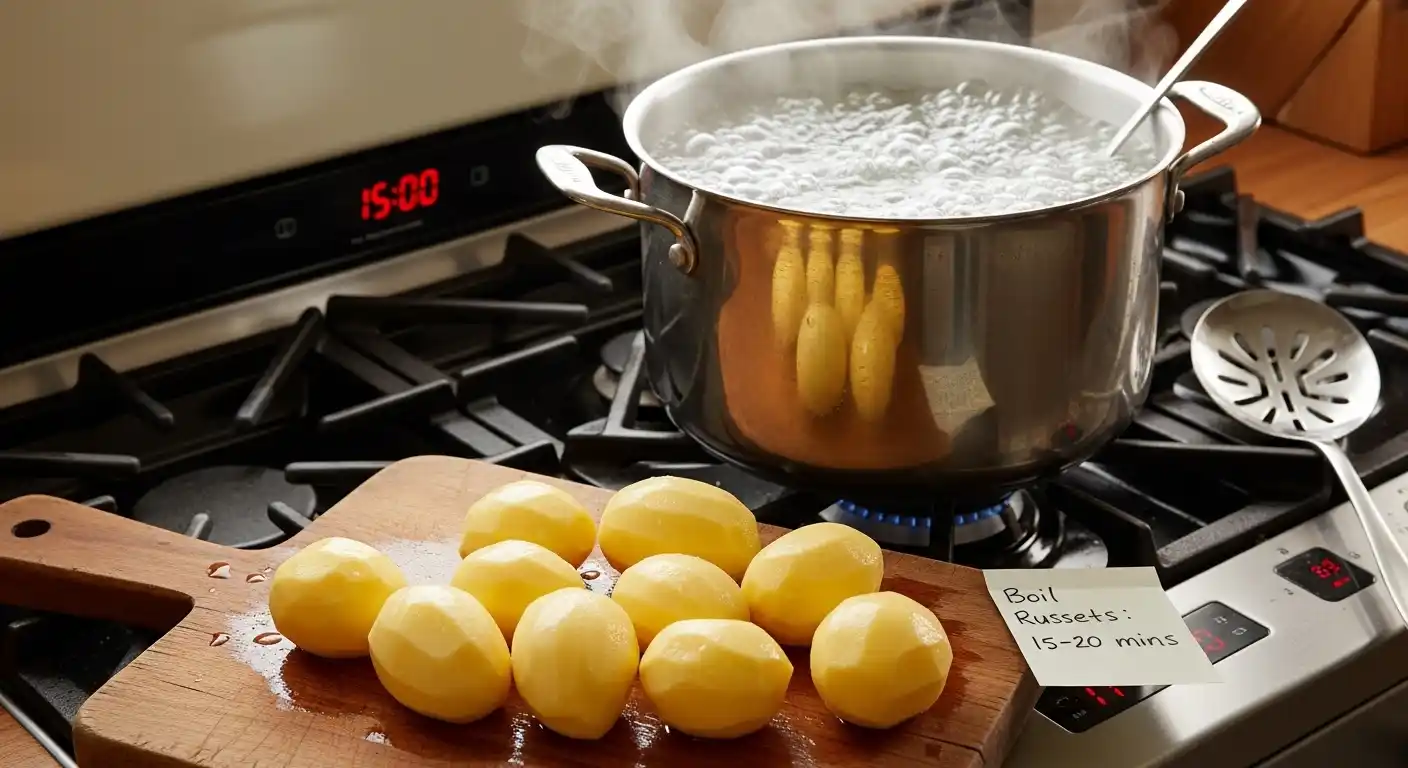

If you’ve ever ended up with mushy, waterlogged potatoes — or worse, ones that are still rock hard in the middle — you’re not alone. Knowing how long to boil russet potatoes is one of those kitchen basics that makes a huge difference. The good news? It’s simpler than you think, and once you nail the timing, you’ll never second-guess it again.
Why Russet Potatoes Are Special
Russets aren’t just any potato. They’re high in starch, low in moisture, and have that thick, rough skin that makes them easy to peel. That combination makes them perfect for mashing, baking, and boiling.
Because of their starchy nature, they absorb water quickly. That means boiling time matters more with russets than with waxy potatoes like red or Yukon Gold. Cook them too long and they fall apart. Too short and you get a grainy, unpleasant texture in the center.
How Long to Boil Russet Potatoes: The Core Timing Guide
Here’s the simple breakdown based on how you’re cutting them:
Whole russet potatoes (medium-sized)
- With skin on: 30 to 40 minutes
- Peeled whole: 25 to 35 minutes
Cubed russet potatoes (1-inch pieces)
- 15 to 20 minutes
Halved russet potatoes
- 20 to 25 minutes
Small baby-sized russets (if you find them)
- 15 to 20 minutes
These times assume you’re starting with cold water and bringing it to a boil together with the potatoes. More on why that matters in a moment.
Starting Cold vs. Dropping Into Boiling Water
This is one of the most debated points in home cooking, and it actually affects your results.
Starting in Cold Water (Recommended)
Place your potatoes in a pot, cover with cold water, then bring everything to a boil together. This method heats the potatoes gradually and evenly. The outside doesn’t overcook before the inside is done. For russets especially, this gives you that creamy, even texture throughout.
Dropping Into Already-Boiling Water
This works better for green vegetables that need a quick blanch. For dense russet potatoes, dropping them into boiling water causes the outside to cook too fast. You can end up with a mushy exterior and an undercooked core — not ideal.
Stick with cold water starts for russets. It’s the more forgiving method and gives consistently better results.
How Long to Boil Diced Potatoes: A Simple Guide
How to Tell When They’re Done
Don’t just trust the clock. Use it as a guide, but always test your potatoes before pulling them off the heat.
The easiest way is the fork or knife test. Poke the thickest part of the potato with a fork or a thin knife. If it slides in with almost no resistance, they’re done. If you feel a firm core, give them another 3 to 5 minutes and test again.
For mashing, you want them very tender — almost falling apart when poked. For potato salad, you want a little more firmness so the cubes hold their shape after mixing.
Boiling Russet Potatoes for Different Dishes
The final use matters a lot. The same potato needs different treatment depending on what you’re making.
For Mashed Potatoes
Boil cubed or halved russets for 20 to 25 minutes until very soft. Drain well and let them steam dry for a minute before mashing. Excess water in mashed potatoes makes them gluey. Russets naturally produce a fluffier mash than waxy varieties, which is why they’re the top choice for this dish.
For Potato Salad
Cut into 1-inch cubes and boil for about 15 minutes. You want them tender but still firm enough to hold up when tossed with dressing. If they crumble in the bowl, they were overcooked.
For Soups and Stews
Cut into chunks and add directly to simmering liquid. They’ll cook in about 15 to 20 minutes depending on size. Keep in mind that russets will break down more than waxy potatoes, which can actually help thicken a soup naturally.
For Gnocchi
Boil whole, unpeeled russets for 35 to 40 minutes. Then peel while hot, rice them immediately, and work quickly. The drier the potato, the lighter and better the gnocchi.
Pros and Cons of Boiling Russet Potatoes
Pros:
- Fast and easy cooking method
- Works for dozens of recipes
- No oil or fat required
- Easy to control texture based on timing
- Brings out natural starchiness for great mashes
Cons:
- Easy to overcook — becomes waterlogged quickly
- Nutrients leach into the cooking water
- Less flavor compared to roasting or baking
- Falls apart faster than waxy potatoes if left too long
Common Mistakes to Avoid
Even experienced cooks get this wrong sometimes. Here are the mistakes worth watching out for:
1. Not salting the water Unsalted water produces bland potatoes. Add a generous pinch of salt when the water comes to a boil. The potato absorbs some of it and the flavor improves significantly.
2. Cutting pieces unevenly If half your cubes are 1 inch and the other half are 2 inches, they won’t cook at the same rate. Some will be mushy while others are still firm. Cut evenly and consistently.
3. Overcooking for potato salad This is probably the most common mistake. People boil potatoes until they’re soft enough for mashing, then wonder why their salad is a mushy mess. Pull them a couple minutes earlier when making salad.
4. Leaving them in the water after cooking Drain immediately once they’re done. Letting potatoes sit in hot water continues to cook them and makes them absorb extra liquid.
5. Skipping the cold water start As mentioned above, starting in boiling water leads to uneven cooking. Cold start, every time.
Best Practices for Perfectly Boiled Russets
Follow these simple habits and you’ll get great results consistently:
- Use similarly sized potatoes when boiling whole. It helps them finish at the same time.
- Keep the lid on while bringing to a boil, then remove or tilt it slightly once boiling to prevent overflow.
- Don’t cut russets too small — tiny pieces overcook in minutes and disintegrate.
- Taste test before draining — one small piece tells you everything.
- Dry them well after draining, especially for mashing or gnocchi. Steam helps evaporate extra moisture.
- Season the cooking water with salt for better-tasting potatoes from the inside out.
Conclusion
Getting the timing right with russet potatoes doesn’t require any fancy equipment or special skills. It just takes a little attention and a willingness to test rather than guess. Whether you’re making silky mashed potatoes, a hearty stew, or a classic potato salad, the same basic principles apply — cold water start, consistent sizing, and always testing with a fork before you drain.
Russets are forgiving in many ways, but they do have a shorter window between perfect and overdone compared to waxy potatoes. Now that you know the timing and the tricks, you’re well-equipped to nail it every single time.
Frequently Asked Questions
1. How long to boil russet potatoes for mashing?
Boil cubed russet potatoes for 20 to 25 minutes, or until a fork slides through easily with no resistance. Drain and steam dry before mashing.
2. Should I peel russet potatoes before boiling?
It depends on the dish. For mashed potatoes or gnocchi, peel them. For potato salad or soups, you can leave the skin on for extra texture and nutrients.
3. Can I boil russet potatoes whole?
Yes. Whole medium russets take 30 to 40 minutes. Poke with a knife to test doneness. This method works great for gnocchi or twice-baked potatoes.
4. Why do my boiled russet potatoes fall apart?
They were likely overcooked, cut too small, or left sitting in hot water after cooking. Drain immediately once tender and don’t boil past the point of fork-tenderness.
5. Does the size of the pot matter when boiling potatoes?
Yes. Use a pot large enough so the potatoes are fully submerged with an inch or two of water above them. A crowded pot leads to uneven cooking and longer boil times.
