
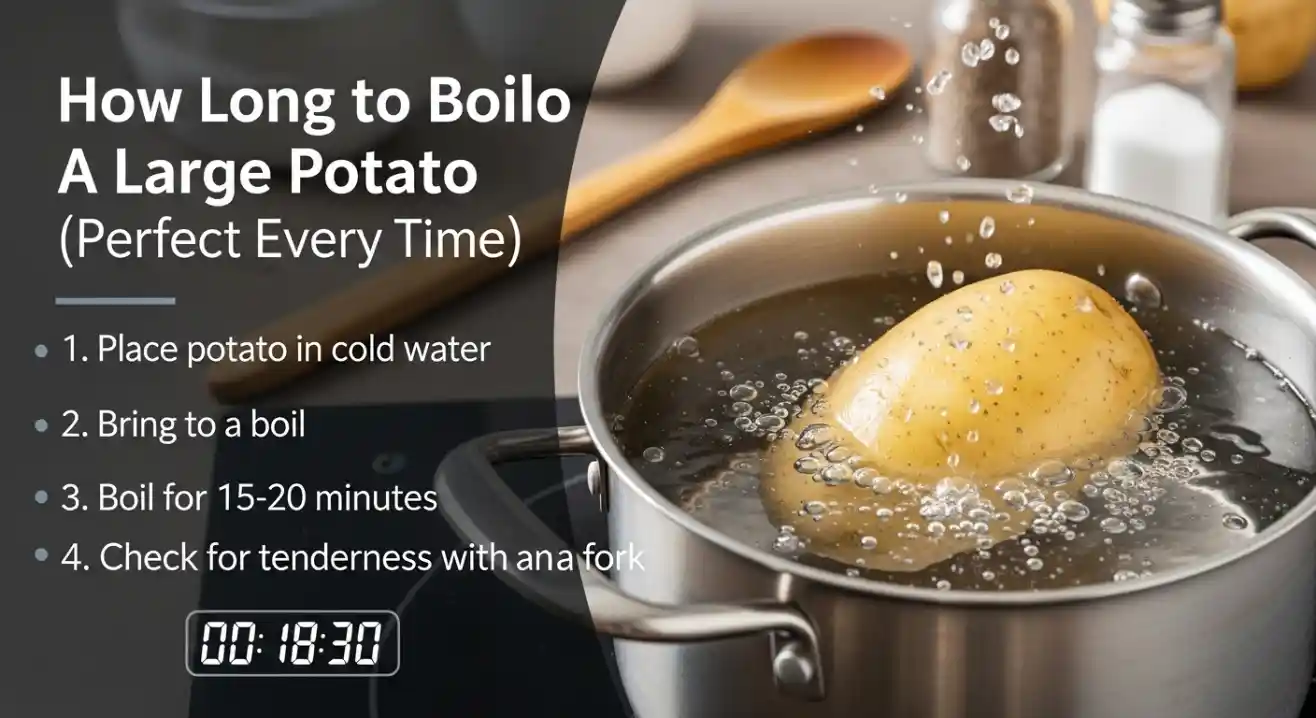

There’s something deeply satisfying about a perfectly boiled potato — fluffy on the inside, tender all the way through, and ready to be mashed, sliced, or tossed into a salad. But if you’ve ever pulled a potato out too early (or left it in too long), you know how quickly things can go wrong. So, how long to boil a large potato? The short answer is 20 to 30 minutes, but there’s a bit more to it than just setting a timer.
Let’s break it down properly.
How Long to Boil a Large Potato: The Basic Timing Guide
A large potato — roughly the size of your fist or about 3 to 4 inches in diameter — generally takes between 20 and 30 minutes to fully boil when whole. That range exists because several factors affect the cooking time:
- Potato variety — Russets are starchy and absorb water faster; waxy types like Yukon Gold hold their shape longer.
- Starting water temperature — Cold water start vs. already-boiling water makes a real difference.
- Whether you peel it or not — Skin-on potatoes take slightly longer.
- Altitude — Water boils at a lower temperature at higher altitudes, so cooking takes longer.
As a general rule of thumb:
- Whole large potato (unpeeled): 25–30 minutes
- Whole large potato (peeled): 20–25 minutes
- Large potato cut into quarters: 15–20 minutes
- Large potato cut into cubes (1 inch): 10–15 minutes
These are starting points, not guarantees. Always test with a fork before calling it done.
Whole vs. Cut: Which Method Should You Use?
Boiling Whole Potatoes
Boiling a potato whole keeps more of its natural flavor locked in. The skin acts as a protective barrier, preventing the flesh from absorbing too much water. This is ideal if you’re planning to:
- Make skin-on mashed potatoes
- Serve them as a side dish with butter and herbs
- Peel them after cooking for a cleaner texture
The downside? It takes longer. You’ll need to plan for that extra 10 minutes.
Selena Green Vargas IMDB: What We Know About Her
Boiling Cut Potatoes
Cutting your potato before boiling speeds everything up significantly. It’s the better choice when you’re:
- Short on time
- Making potato salad (cubes hold up well)
- Preparing potatoes for soups or stews
The trade-off is that cut potatoes absorb more water, which can make them a bit waterlogged if you’re not careful. Drain them quickly and let them steam-dry in the pot for a minute or two after draining.
Step-by-Step: How to Boil a Large Potato Correctly
Getting the timing right is only part of the equation. Here’s how to do it properly from start to finish.
Step 1: Prep the potato Scrub the skin clean under cold water. If you’re peeling it, do that now. For large potatoes, you can leave them whole or cut them based on your recipe needs.
Step 2: Use the right pot Use a pot large enough so the potato sits comfortably with at least an inch of water above it. Crowding the pot slows everything down.
Step 3: Start with cold water Place the potato in the pot, then cover with cold water. Starting cold helps the potato cook evenly from the outside in. If you drop it into already-boiling water, the outside cooks faster than the inside.
Step 4: Add salt Add a generous pinch of salt to the water. This seasons the potato as it cooks — not just on the surface, but all the way through.
Step 5: Bring to a boil, then reduce Bring the water to a full boil over medium-high heat, then reduce to a steady simmer. Rapid boiling can break apart the potato exterior before the inside is done.
Step 6: Test for doneness Start testing at the 20-minute mark. Insert a fork or thin knife into the thickest part. If it slides in with no resistance, it’s done. If there’s still a firm center, give it another 3 to 5 minutes.
Step 7: Drain and rest Drain the water immediately and let the potato sit uncovered in the pot for 1 to 2 minutes. The steam escapes and the surface dries slightly, which improves texture.
Pros and Cons of Boiling Potatoes
Pros
- Simple and requires minimal equipment
- Preserves a lot of the potato’s natural nutrients (especially compared to frying)
- Works well for multiple recipes — mashing, salads, soups
- Easy to control texture based on cook time
Cons
- Water-soluble vitamins like vitamin C and B6 can leach into the cooking water
- Overcooked potatoes turn mushy and fall apart
- Takes longer than microwaving or steaming for quick meals
- Boiling whole large potatoes requires patience and planning ahead
Common Mistakes People Make When Boiling Potatoes
Even experienced cooks slip up here. Watch out for these:
Skipping the cold water start. Dropping a large potato straight into boiling water seems faster, but it leads to uneven cooking — mushy on the outside, raw in the middle.
Not salting the water. Unsalted water produces bland potatoes. Salt isn’t just for flavor; it also slightly raises the boiling point and helps with texture.
Boiling at too high a heat. A hard rolling boil bashes the outside of the potato around. Keep it at a moderate, steady simmer once it reaches boiling.
Not testing before pulling them out. Always use the fork test. Cooking times vary by size, variety, and stove. Never rely on time alone.
Letting them sit in the water. Once they’re done, drain them. Leaving boiled potatoes sitting in hot water continues cooking them and makes them waterlogged.
Best Practices for Perfectly Boiled Potatoes
Follow these habits and you’ll rarely have a bad result:
- Choose similar-sized potatoes when boiling more than one. Mixed sizes mean some are overcooked while others are underdone.
- Keep the skin on when possible — especially for boiling whole. It protects the flesh and adds a subtle earthy flavor.
- Use enough water — the potato should be fully submerged with room to spare.
- Add a splash of vinegar to the water when making potato salad. It helps the potatoes hold their shape after boiling.
- Steam-dry after draining — let the potatoes sit in the hot pot with the lid off for a minute. The residual heat evaporates excess moisture.
Conclusion
Boiling a large potato isn’t complicated, but it does reward a little attention. Most large potatoes need around 20 to 30 minutes, depending on whether they’re whole or cut, peeled or unpeeled. The key is starting in cold salted water, maintaining a gentle simmer, and using the fork test rather than just guessing by time.
Once you nail the basics, you’ll notice the difference in every dish — creamier mashed potatoes, firmer potato salads, and sides that actually taste seasoned all the way through. It’s one of those small kitchen skills that quietly improves everything else you make.
Frequently Asked Questions
Q1: How long does it take to boil a large whole potato?
A whole large potato typically takes 25 to 30 minutes in simmering water. Start checking at 20 minutes using a fork to test for tenderness in the center.
Q2: Should I boil potatoes with the skin on or off?
Either works, but skin-on takes a few minutes longer. Leaving the skin on helps retain flavor and prevents the flesh from becoming waterlogged during boiling.
Q3: How do I know when a boiled potato is done?
Insert a fork or thin knife into the thickest part. If it slides through without resistance, the potato is fully cooked. If you feel any firmness, keep boiling and check again in 3–5 minutes.
Q4: Can I boil a large potato faster by cutting it?
Yes. Cutting a large potato into quarters reduces boiling time to around 15–20 minutes. Cutting into 1-inch cubes brings it down to 10–15 minutes.
Q5: Does salt in the water affect how long it takes to boil a potato?
Salt raises the boiling point of water very slightly, but not enough to change cook times meaningfully. Its main benefit is flavor — it seasons the potato from the inside out as it cooks.
