
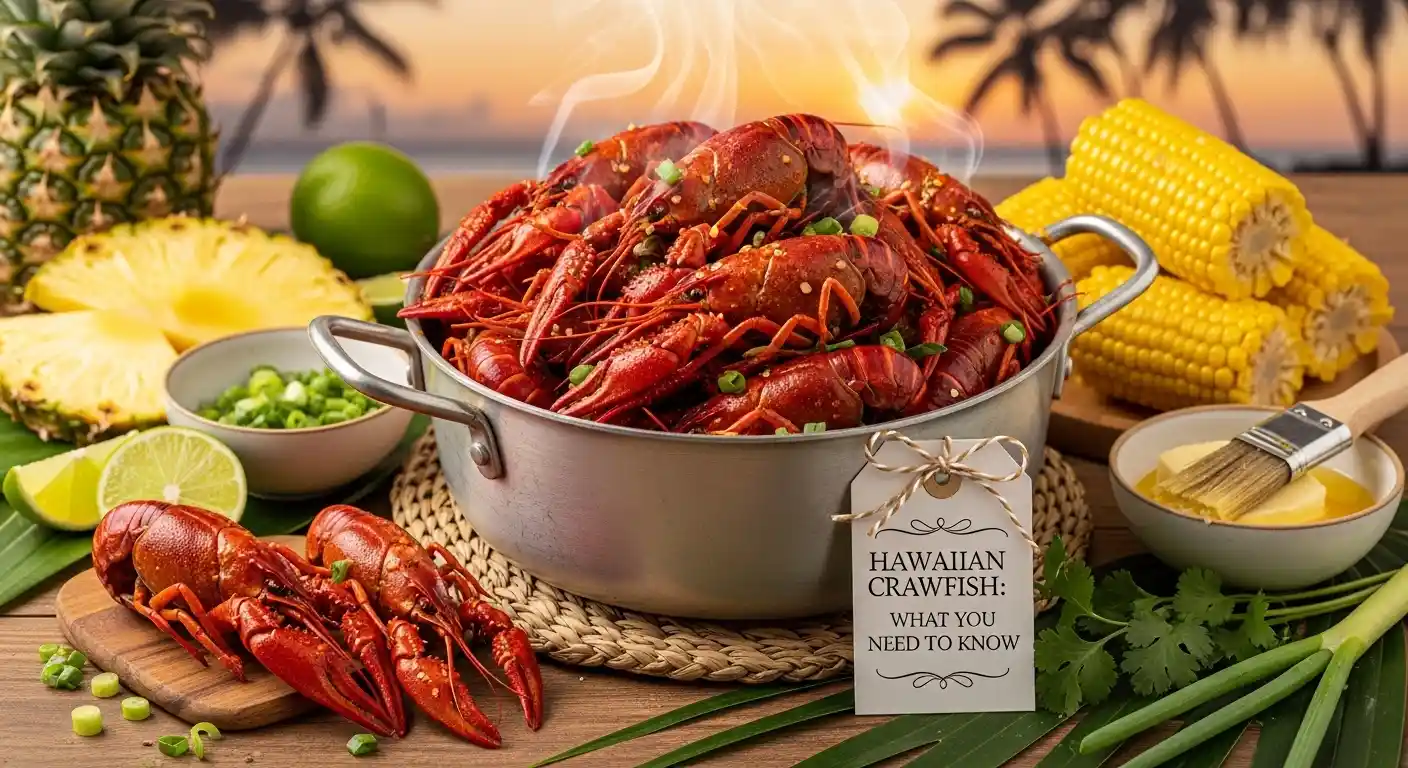

If you’ve ever wandered through a Hawaiian farmers market or sat down at a local plate lunch spot, you might have come across something unexpected — crawfish. Hawaiian crawfish might not be the first thing that comes to mind when you think of island food, but they’ve carved out a quiet, delicious place in Hawaii’s diverse culinary scene. Whether you’re a seafood lover, a curious traveler, or someone who grew up eating crawfish on the mainland, there’s plenty to explore here.
Let’s break it all down.
What Exactly Is Hawaiian Crawfish?
Crawfish — also called crayfish, crawdads, or freshwater lobsters — are small crustaceans that live in freshwater environments. In Hawaii, the most commonly found species is the red swamp crawfish (Procambarus clarkii), originally native to the southern United States and northern Mexico.
So how did they end up in Hawaii? They were likely introduced in the mid-20th century, either intentionally for aquaculture or accidentally through bait releases. Today, they thrive in Hawaii’s freshwater streams, irrigation ditches, and taro fields — especially on Oahu and Maui.
They’re not native to the islands, which actually makes them a bit controversial. But more on that in a moment.
Where to Find Crawfish in Hawaii
Freshwater Habitats Across the Islands
You won’t find Hawaiian crawfish in the ocean. They stick to freshwater areas like:
- Irrigation canals in agricultural regions
- Taro lo’i (flooded taro paddies)
- Streams and drainage ditches
- Wetlands and marshy areas
Oahu’s central plain and parts of Maui have the highest concentrations. If you’re catching your own, check local regulations first — Hawaii has specific rules about harvesting from certain waterways.
Local Markets and Restaurants
If you’re not the fishing type, you can sometimes find live or cooked crawfish at:
- Specialty seafood markets in Honolulu
- Local food festivals and pop-up events
- Some plate lunch spots and Hawaiian fusion restaurants
- Farmers markets, particularly in rural communities
Availability can be seasonal and inconsistent, so calling ahead is always a smart move.
How Hawaiian Crawfish Are Cooked and Eaten
Classic Boil Style
The most popular way to prepare crawfish in Hawaii — just like in Louisiana — is a classic crawfish boil. You throw them in a big pot with spices, corn, potatoes, and sausage. The flavor is bold, messy, and absolutely worth the effort.
Many local cooks put their own island spin on the boil by adding:
- Lemongrass and ginger
- Hawaiian chili pepper
- Coconut milk for a creamy, tropical twist
- Soy sauce and garlic for an Asian-influenced broth
Other Preparation Methods
Beyond the boil, crawfish show up in a few other forms around Hawaii:
- Stir-fried with garlic butter — quick, simple, and packed with flavor
- Crawfish fried rice — a natural fit given Hawaii’s deep love for fried rice
- Crawfish curry — mixing island spices with the richness of a Thai or Hawaiian-style curry base
- Grilled over charcoal — especially at backyard gatherings
Pros and Cons of Hawaiian Crawfish
Like most things, there are two sides to the story.
Pros
- Delicious and versatile — they take on seasonings beautifully and work in a wide range of dishes
- High in protein — crawfish are lean and nutritious, making them a solid seafood option
- Affordable — compared to lobster or crab, crawfish are much more budget-friendly
- Part of local food culture — eating locally harvested crawfish connects you to Hawaii’s unique culinary landscape
- Invasive species management — harvesting them actually helps protect native ecosystems
Cons
- Invasive species concerns — red swamp crawfish can damage native habitats, disrupt taro farming, and outcompete local species
- Limited availability — they’re not always easy to find at restaurants or markets
- Labor-intensive to eat — let’s be real, peeling crawfish takes time and patience
- Regulatory gray areas — harvesting in certain areas may require permits or be restricted
- Inconsistent quality — farmed vs. wild-caught can vary quite a bit in taste and texture
Common Mistakes People Make With Crawfish
Even seasoned seafood fans trip up with crawfish. Here are a few mistakes worth avoiding.
1. Not purging them before cooking Crawfish need to be rinsed thoroughly — ideally soaked in clean water for 30 minutes before boiling. Skipping this step means gritty, muddy-tasting results.
2. Overcooking them Crawfish cook fast. Overcooking makes the tail meat tough and rubbery. Once the shells turn bright red and the tails curl, they’re done.
3. Using too little seasoning Crawfish have a mild natural flavor. Don’t be shy with the spices, citrus, and aromatics. A timid boil is a disappointing boil.
4. Throwing away the heads In Louisiana tradition — and increasingly in Hawaii too — sucking the juices from crawfish heads is half the experience. Don’t toss them before giving that a try.
5. Ignoring local sourcing rules If you’re catching crawfish in Hawaii on your own, always check with the Hawaii Division of Aquatic Resources first. Harvesting from protected waterways or taro fields without permission can cause legal trouble and real ecological harm.
Best Practices for Cooking and Sourcing Hawaiian Crawfish
Want to get the most out of your crawfish experience in Hawaii? Keep these tips in mind.
- Buy live crawfish when possible — they’re fresher and more flavorful than pre-cooked
- Source from responsible vendors — ask where they came from and how they were harvested
- Season aggressively — layer your spices in the boil water and taste as you go
- Serve immediately — crawfish cool down fast and are best eaten right out of the pot
- Pair thoughtfully — cold Hawaiian beer, fresh poi, or steamed rice all complement crawfish well
- Involve the whole table — crawfish are a communal food; spread them on newspaper and dig in together
Conclusion
Hawaiian crawfish might be a non-native species, but they’ve found a real home in the islands — both ecologically and culinarily. They bring together the soul of Southern crawfish boils with Hawaii’s bold, multicultural flavor profile. Whether you’re cooking them in a classic spiced boil or throwing them into a coconut curry, they offer a genuinely fun and flavorful eating experience.
Just do it responsibly. Source them wisely, cook them well, and enjoy every messy, delicious bite.
Frequently Asked Questions
1. Are crawfish native to Hawaii?
No. The red swamp crawfish found in Hawaii is an introduced species, originally from the Gulf Coast region of the United States. They arrived in Hawaii sometime in the 20th century.
2. Is it legal to catch crawfish in Hawaii?
It depends on the location. Some areas allow harvesting, while others — particularly protected streams and taro lo’i — may have restrictions. Always check with the Hawaii Division of Aquatic Resources before you go.
3. Where can I buy Hawaiian crawfish?
Try specialty seafood markets in Honolulu, local farmers markets, or food festivals. Availability varies by season, so calling ahead is a good idea.
4. How do Hawaiian crawfish taste compared to Louisiana crawfish?
Very similar in base flavor, but Hawaiian preparations often lean into Asian and Pacific influences — think garlic butter, ginger, or coconut milk — giving them a distinct island character.
5. Are crawfish good for you?
Yes. Crawfish are low in fat and calories but high in protein and key nutrients like vitamin B12, iron, and selenium. They’re a solid, nutritious seafood choice as long as they’re not drowning in butter — though no judgment if they are.
