
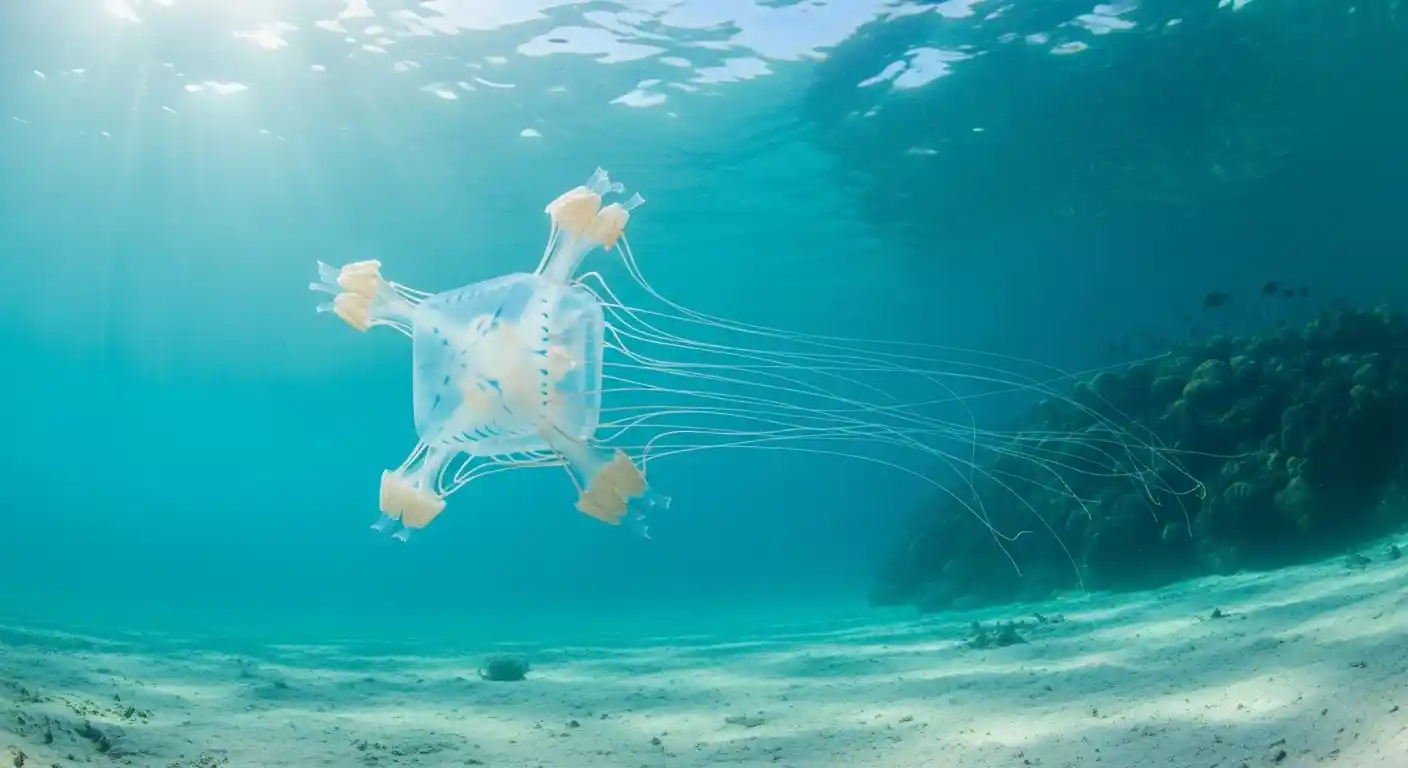

If you’re planning to hit the water in Honolulu, box jelly season is something you genuinely need to understand before you go. These small but painful creatures show up on Oahu’s shores with surprising regularity — and if you’re not paying attention, your beach day can turn into a very uncomfortable afternoon.
When Does Box Jelly Honolulu Season Actually Hit?
Box jellyfish don’t just show up randomly. On Oahu, they follow a lunar cycle that’s consistent enough that the ocean safety division actually publishes monthly warnings.
Here’s how it works: box jellyfish typically arrive on Oahu’s south-facing shores about 8 to 10 days after a full moon. They usually hang around for two to three days before drifting back offshore. So if you know when the full moon falls, you can calculate the rough window when conditions will be risky.
This pattern holds throughout the year — it’s not just a summer thing. January, March, July, September… the moon doesn’t take a break, and neither do the jellyfish.
Which Beaches Are Most Affected?
South-shore beaches take the brunt of it. The ones you’ll want to watch closely include:
- Ala Moana Beach Park — extremely popular and frequently impacted
- Waikiki Beach — high tourist traffic makes this one especially important to monitor
- Hanauma Bay — a snorkeling hotspot that can see significant influxes
- Sandy Beach — already known for rough shore breaks; jellyfish add another layer of risk
North-shore and east-facing beaches are generally less affected during these windows, though it’s never a guarantee.
What Makes Box Jellyfish Different From Other Species?
A lot of people confuse box jellyfish with Portuguese man-o’-war or moon jellies. They’re not the same, and the distinction matters.
Box jellyfish — specifically Alatina alata, the species common in Hawaiian waters — are smaller than the notorious Australian box jelly, but their sting is still serious. They’re mostly translucent, roughly the size of a golf ball or a bit larger, with trailing tentacles that can reach several inches.
Why Their Sting Hits So Hard
The venom works fast. When tentacles make contact with skin, the nematocysts (tiny stinging cells) fire almost instantly. Most people describe it as a burning, electric-shock sensation. In mild cases, you’ll get red welts and pain that lasts anywhere from 20 minutes to a few hours. In rarer cases — especially with full-body exposure or in people with sensitivities — the reaction can be more severe.
Children and elderly swimmers are at higher risk of a strong reaction, so extra caution is warranted for them.
hallenger Gaming: Rise, Grind, and Dominate
What To Do If You Get Stung
This is where a lot of people make things worse. There are some stubborn myths floating around about jellyfish sting treatment that can actually increase the pain.
Do this:
- Get out of the water immediately
- Carefully remove any visible tentacles — use a card, stick, or gloved hand, never bare fingers
- Rinse the area with seawater (not fresh water)
- Apply heat if available — a warm pack or hot water can help deactivate venom
- Seek lifeguard assistance at the beach
Don’t do this:
- Rub the sting — this causes more nematocysts to fire
- Pour fresh water over it immediately — osmotic changes can worsen the reaction
- Use urine — this is a myth and doesn’t help
Most Honolulu lifeguards carry supplies specifically for jellyfish stings. If you’re at a staffed beach, go to them first.
Pros and Cons of Swimming During Box Jelly Windows
Sometimes people can’t avoid being in Honolulu during peak box jelly days — maybe it’s a vacation they’ve planned for months. Here’s a realistic look at the trade-offs.
Pros of swimming anyway (with precautions):
- South shore beaches can still be clear outside of peak morning hours
- Wearing a full rash guard or wetsuit significantly reduces exposed skin
- Lifeguards are typically on high alert and well-prepared during known windows
Cons:
- Even a light influx can mean hundreds of jellyfish in the water at once
- They’re nearly invisible until you’re already in contact
- Pain and potential allergic reactions can ruin days — or require medical attention
- Children are especially vulnerable
Honestly, if you have flexibility, it’s just smarter to wait the 48–72 hour window out and swim after.
Common Mistakes Tourists Make
Honolulu gets millions of visitors a year, and a large portion of jellyfish sting incidents involve people who simply didn’t know what to watch for.
Ignoring posted signs. Lifeguard towers and beach entrances often post jellyfish warning flags during high-risk days. A lot of tourists either don’t notice them or assume they’re overly cautious. They’re not.
Not checking before they go. The City and County of Honolulu’s ocean safety site posts box jellyfish forecasts monthly. It takes 30 seconds to check. Most people don’t bother.
Swimming at dawn. Box jellyfish tend to be closer to shore in the early morning hours. Midday to afternoon, they often drift back out. Swimming later in the day on a warning day is safer than early morning.
Wearing minimal swimwear. A bikini or board shorts leaves a lot of skin exposed. A rash guard covers your torso, shoulders, and arms — the most commonly stung areas.
Best Practices for Staying Safe
You don’t have to avoid the ocean entirely. You just need a bit of strategy.
- Bookmark the forecast page. The City and County of Honolulu Ocean Safety division posts monthly jellyfish calendars. Add it to your phone before your trip.
- Talk to lifeguards. They know what the water looked like that morning. A 10-second conversation can save you a lot of pain.
- Cover up. Rash guards, wetsuits, and even UV-protection leggings are widely available in Honolulu. Use them during warning windows.
- Swim at staffed beaches. During jellyfish season, you want trained eyes nearby. Don’t venture to remote or unstaffed spots on high-risk days.
- Keep kids close. Their smaller body mass means venom affects them more intensely. Supervise tightly and consider keeping them out of the water entirely on warning days.
Conclusion
Box jellyfish in Honolulu are a predictable, manageable part of swimming in Hawaiian waters — as long as you treat them seriously. They show up like clockwork after full moons, they favor south shore beaches, and they’re nearly impossible to spot until it’s too late. But with a quick check of the forecast, the right gear, and a little common sense, you can still have an incredible time in the water.
The ocean around Oahu is stunning. Don’t let a jellyfish ruin it — just plan around them.
FAQs
1. How often do box jellyfish come to Honolulu beaches?
They typically appear once a month, about 8 to 10 days after each full moon, and usually stay near shore for two to three days.
2. Are box jellyfish in Hawaii dangerous?
They can cause significant pain and skin reactions. While fatalities from Hawaiian box jellyfish are extremely rare, severe allergic reactions are possible, especially in children and sensitive individuals.
3. Which Honolulu beaches are safest during box jelly season?
North and east-facing shores are generally less impacted. During south-shore warnings, beaches like Lanikai or Kailua on the windward side are safer alternatives.
4. Where can I check the box jellyfish forecast for Oahu?
The City and County of Honolulu’s Ocean Safety division publishes a monthly jellyfish calendar on their official website. It’s free and updated regularly.
5. What’s the best treatment for a box jellyfish sting in Hawaii?
Remove tentacles without touching them barehanded, rinse with seawater, apply heat, and visit a lifeguard station. Avoid rubbing the area or rinsing with fresh water right away.
