

You walk into your bathroom, flip on the light, and see them. Tiny, fuzzy, moth-like flies zigzagging around your mirror. You swat them away, but the next morning, there are ten more. You’ve scrubbed the sink and bleached the toilet, yet they keep coming back like a recurring nightmare.
The secret isn’t in the air; it’s hidden deep inside your pipes. Those adults you’re killing are just the symptoms. The real factory is the drain fly larvae living in the thick, gelatinous slime coating your plumbing. If you don’t destroy the nursery, you’ll never win the war.
What is Drain Fly Larvae?
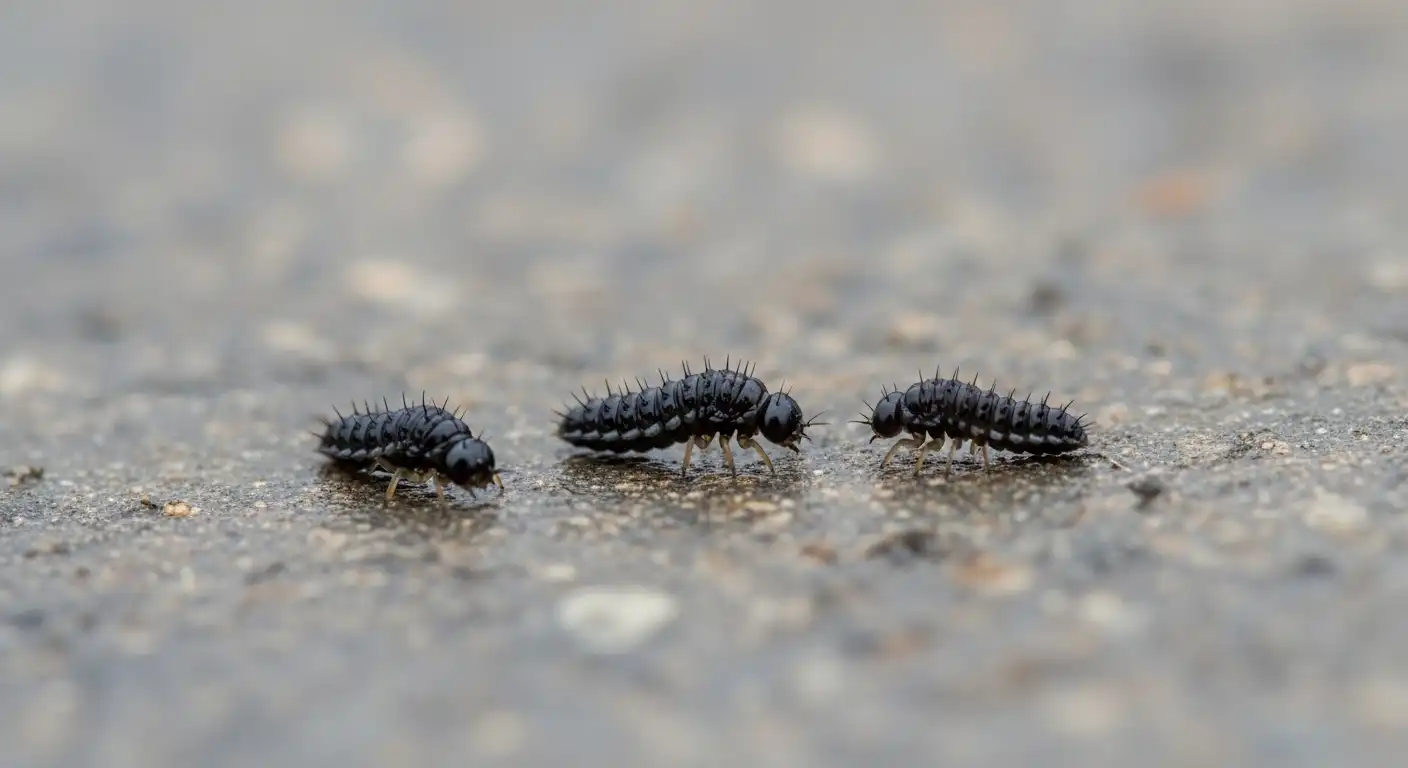
Drain fly larvae are the immature stage of the Psychodidae family, commonly known as moth flies or sink flies. They don’t look like flies at all. Instead, they appear as tiny, legless, worm-like creatures usually measuring between 4mm to 10mm in length.
They are typically pale gray or brown with a slightly darker stripe on their “back.” What makes them unique—and frustrating—is their breathing tube. They can submerge themselves in liquid and slime while still breathing through a snorkel-like appendage.
These larvae thrive in the organic “biofilm” that builds up in your drains. This biofilm is a mixture of hair, soap scum, skin cells, and grease. To a drain fly larva, your dirty P-trap is a five-star buffet and a safe nursery all rolled into one.
Drain Fly Larvae Explained: The “Forgotten Floor Drain” Scenario
To understand how these pests take over, imagine a guest bathroom that rarely gets used. You might have a floor drain in the laundry room or a shower in the basement that stays dry for weeks.
Inside those pipes, the water in the P-trap evaporates. The remaining organic sludge starts to ferment. A single female drain fly finds her way in through a window or a different pipe and lays up to 100 eggs in that muck.
Within 48 hours, the eggs hatch. Now, you have a colony of drain fly larvae eating the slime. Because no one is running the water, they aren’t being flushed away. By the time you notice the “fuzzy flies” in the hallway, you likely have hundreds of larvae tucked behind the pipe walls, protected by the very sludge they eat.
The larvae are incredibly resilient. They can survive high temperatures and even low-oxygen environments, which is why simply “running the hot water” for a minute rarely solves the problem.
Master Military Time: The Ultimate 24-Hour Clock Guide
Step-by-Step Instructions to Eliminate the Infestation
Getting rid of the larvae requires a mechanical and chemical approach. You have to break the “home” they live in. Follow these steps to clear your pipes:
-
Identify the Source: Tape a clear plastic cup over your drains overnight. Use a few small air holes. In the morning, check which cup has flies stuck to the tape or buzzing inside. That is your target drain.
-
The Duct Tape Test: If you aren’t sure about the larvae specifically, place a piece of duct tape over the drain opening (sticky side down) for 24 hours. If larvae are crawling up or adults are emerging, they will stick to it.
-
Mechanical Cleaning: Use a pipe brush (a long, flexible wire brush) to scrub the inside of the pipe. You need to physically break up the biofilm. This is the most important step that most people skip.
-
Flush with Boiling Water: Pour a gallon of near-boiling water down the drain. This thins out the remaining loosened slime and can kill some larvae on contact.
-
Apply an Enzyme Cleaner: Use a specialized microbial or enzyme-based drain cleaner. Unlike harsh acids, enzymes “eat” the organic matter that the drain fly larvae feed on. Avoid using thick caustic gels if you have a septic system.
-
The Vinegar and Soda Punch: For a DIY boost, pour half a cup of baking soda down the drain followed by a cup of white vinegar. Let it fizz for 30 minutes, then flush with more hot water.
-
Dry It Out: If possible, do not use that sink or shower for 24 hours. Depriving the larvae of moisture is the final blow.
Common Mistakes People Make
Most homeowners approach this like a standard clog, which leads to total failure. Here are the errors that keep the flies coming back:
-
Relying Solely on Bleach: Bleach is a great disinfectant, but it is a poor degreaser. It often slides right over the top of the thick biofilm without killing the larvae buried inside. It also dissipates too quickly to be effective in a wet pipe.
-
Forgetting the Overflow: Every sink has an overflow hole. This is a prime breeding ground because it rarely gets flushed with water or soap. If you ignore the overflow, the drain fly larvae will continue to thrive there.
-
Neglecting the P-Trap: Sometimes the slime is so thick that liquid cleaners just pass through the center. If the infestation is severe, you may need to physically remove the P-trap under the sink and scrub it manually in a bucket.
-
Assuming One Treatment is Enough: The life cycle of a drain fly is about three weeks. If you kill the larvae today but miss the eggs, you’ll have a new batch in a few days. Consistency is key.
Drain Fly Larvae vs. Fruit Fly Larvae
It is easy to confuse these two, but their “homes” are very different. If you treat the drain for fruit flies, you’re wasting your time.
| Feature | Drain Fly Larvae | Fruit Fly Larvae |
| Primary Habitat | Gelatinous biofilm in pipes/sewers | Rotting fruit or fermenting vegetables |
| Appearance | Gray/Brown, dark stripe, “snorkel” | Creamy white, tapered at both ends |
| Feeding Habits | Decaying organic matter and bacteria | Yeast and fungal growth on sugar |
| Movement | Sluggish, stays attached to slime | More active, crawls on surfaces |
| Resilience | Highly resistant to water and heat | Easily drowned or washed away |
Pro Tips and Best Practices
To keep your home fly-free long term, you have to think like a plumber.
Mineral Oil for Vacant Drains: If you are going on vacation or have a guest bathroom, pour a tablespoon of mineral oil down the drain. The oil floats on top of the water in the P-trap, preventing evaporation and stopping flies from laying eggs in the standing water.
The Power of Steam: if you have a handheld clothes steamer, use it on your drain openings and overflows. The concentrated heat penetrates the slime layers much better than a pot of water and kills drain fly larvae instantly.
Check Your Sump Pump: Many people overlook the sump pump basin in the basement. This is essentially a giant petri dish for larvae. Ensure your sump pump lid is sealed and the pit is cleaned at least once a year with a biological cleaner.
Scrub the Grates: Often, the larvae are living on the underside of the metal drain grate or the “pop-up” stopper. Pull the stopper out and scrub it with an old toothbrush. You’ll be disgusted by what you find—but the flies will be gone.
Frequently Asked Questions
Are drain fly larvae harmful to humans?
They do not bite and aren’t known to transmit diseases through stings. However, because they live in sewage and slime, they can mechanically transport bacteria onto your surfaces. They can also aggravate asthma in some individuals when they die and become dust.
How long does it take to get rid of them?
If you are diligent, you can see a massive reduction in 48 hours. However, you should continue enzyme treatments for at least 7 to 10 days to ensure you’ve broken the entire reproductive cycle.
Can I use Drano to kill drain fly larvae?
While caustic cleaners can kill some larvae, they are often too harsh for regular use and can damage older pipes. Biological or enzyme cleaners are much more effective because they actually remove the food source (the biofilm) rather than just burning a hole through it.
Why do I have them in my kitchen sink even though I use the disposal?
Garbage disposals are notorious for trapping food particles in the rubber splash guard and the upper rim of the grinding chamber. These “splash zones” stay moist but don’t get fully flushed, making them a perfect nursery for drain fly larvae.
Will vinegar and baking soda kill the larvae?
The reaction creates mechanical pressure that can help loosen the slime, but the chemicals themselves aren’t toxic enough to kill all the larvae. Think of it as a “prep” step before scrubbing or using an enzyme cleaner.
Closing the Loop on Your Pest Problem
Dealing with an infestation is more than just an annoyance; it’s a sign that your drainage system needs a little TLC. By focusing your efforts on the drain fly larvae rather than the flying adults, you are attacking the root of the problem. Remember to scrub the pipes, use enzymes to eat the slime, and keep your drains dry when not in use.
Your next step: Go to your kitchen sink right now, pull out the removable drain stopper, and inspect the underside. If you see a thick, dark coating, grab an old toothbrush and some soap—you’ve just found the frontline of your battle.
