
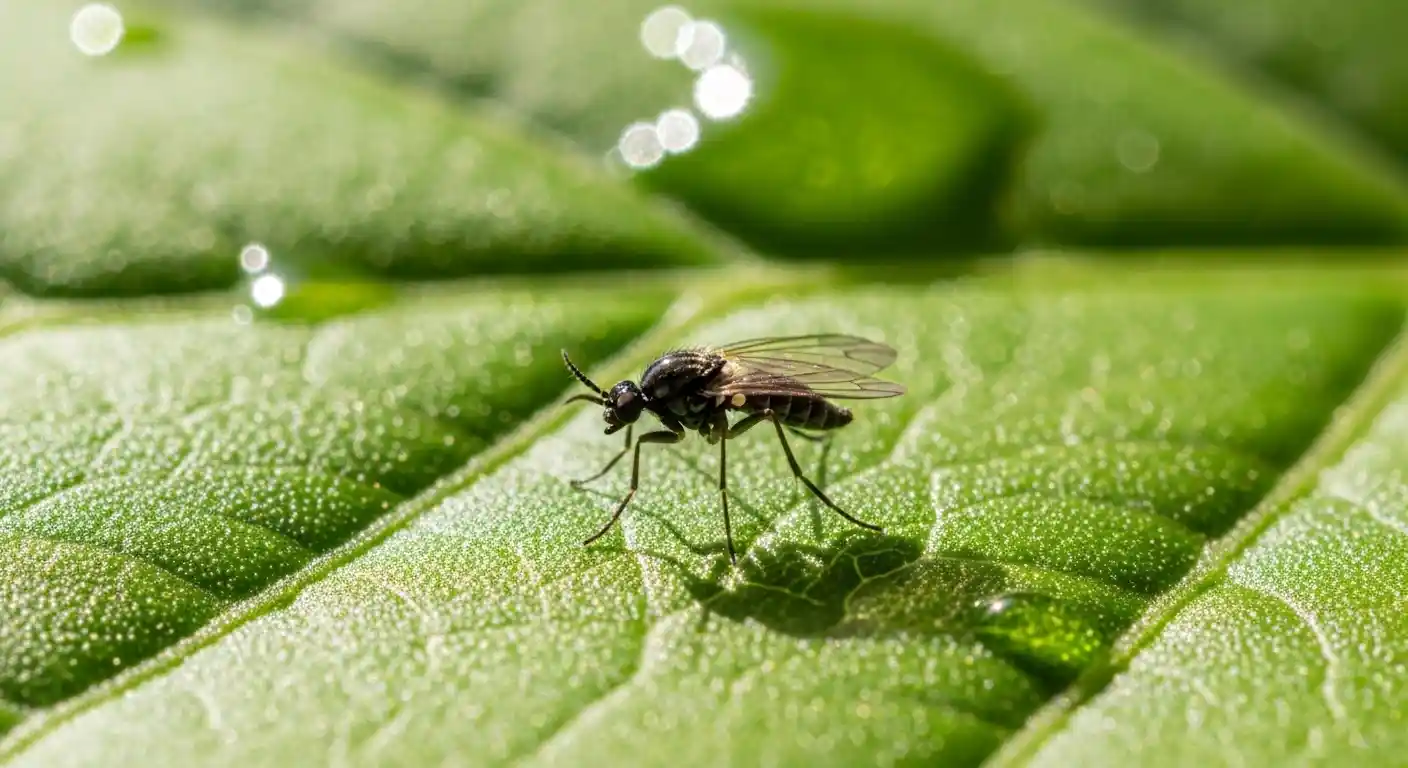

You’re sitting on the couch, finally relaxing after a long day, when a tiny black speck zig-zags across your peripheral vision. You swat at it, but it’s gone. A moment later, it’s hovering right in front of your nose. Then you notice three more dancing over your fruit bowl and a small cloud rising from your favorite Monstera plant.
It feels like a personal invasion. These miniature pests are relentless, appearing out of nowhere and making your spotless kitchen feel unsanitary. If you’re tired of clapping your hands together like a madman trying to catch a ghost, you’re in the right place. We are going to stop the cycle today.
What is the Secret to How to Get Rid of Gnats in the House?
To understand how to get rid of gnats in the house, you first have to realize that “gnat” is a catch-all term. In most homes, you aren’t dealing with just one type of bug. You are likely hosting fungus gnats, fruit flies, or drain flies.
While they all look like tiny flying dots, they live in very different places. Fungus gnats love the moist soil of your houseplants. Fruit flies want your overripe bananas. Drain flies live in the slimy film inside your pipes. To kill them off, you have to target their specific breeding ground, or they will just keep coming back.
Identifying Your Gnat Problem: A Real-World Scenario
Imagine Sarah. Sarah loves her indoor jungle and keeps a bowl of fresh lemons on her counter. Lately, she’s noticed tiny flies every time she waters her plants. She tried spraying a general insecticide in the air, but the next morning, the flies were back in full force.
Sarah’s mistake was treating the “symptom” (the flying adults) rather than the “source” (the larvae in the soil). Because she was overwatering her plants, the soil stayed damp, creating a perfect nursery for gnat eggs. To solve her problem, she didn’t need more spray; she needed to let her soil dry out and use a biological control to kill the larvae. Once the “nursery” was gone, the infestation vanished within a week.
2 PM CST in EST: The Fast Guide to Syncing Your Schedule
Step-by-Step Instructions for Eliminating Gnats
If you want to know how to get rid of gnats in the house effectively, you need a multi-pronged attack. Follow these steps in order to see results within 48 hours.
1. Identify the Source
Walk through your house and tap your plant pots, check your fruit basket, and look around your sink drains. Wherever you see a “cloud” rise up, that is your primary target.
2. Create the Apple Cider Vinegar Trap
This is the gold standard for fruit flies and many common gnats.
-
Fill a small ramekin or jar with 2 inches of Apple Cider Vinegar.
-
Add two drops of liquid dish soap (this breaks the surface tension).
-
Leave it on the counter near the infestation. The gnats are attracted to the fermentation, land on the water, and sink immediately.
3. Dry Out Your Plants
If the gnats are coming from your soil, stop watering immediately. Let the top two inches of soil dry out completely. Fungus gnat larvae cannot survive in dry dirt. For a faster fix, mix one part 3% hydrogen peroxide with four parts water and use it to water your plants. It kills larvae on contact and releases oxygen for the roots.
4. Sanitize the Drains
For drain flies, your goal is to remove the “schmutz” they live in.
-
Boil a kettle of water and pour it down the drain.
-
Follow up with a half-cup of baking soda and a cup of white vinegar.
-
Let it fizz for 10 minutes, then flush with more boiling water.
5. Use Sticky Traps
Place yellow sticky cards (available at hardware stores) near your plants. These catch the breeding adults before they can lay more eggs, breaking the reproductive cycle while your other treatments handle the larvae.
Common Mistakes People Make
Most people fail to get rid of gnats because they underestimate how fast these bugs reproduce. A single female can lay hundreds of eggs in her short lifespan.
-
Only killing the flyers: If you only use a fly swatter or a spray, you are ignoring the 90% of the population currently living as eggs or larvae in your drains or soil.
-
Leaving “leaks” in the system: You might clean your kitchen, but if you leave a damp sponge in the sink or a half-empty soda can in the recycling bin, you’ve left the door wide open.
-
Overwatering houseplants: This is the #1 cause of indoor gnats. If your soil is always green with algae or feels damp to the touch, you are essentially running a gnat farm.
-
Using the wrong vinegar: White vinegar doesn’t work for traps nearly as well as Apple Cider Vinegar. The gnats need that sweet, fermented scent to be lured in.
Gnats vs. Fruit Flies: How to Tell the Difference
Knowing exactly what you’re fighting helps you choose the right weapon.
| Feature | Fungus Gnats | Fruit Flies | Drain Flies |
| Appearance | Tiny black bodies, long legs | Tan/orange body, red eyes | Fuzzy, moth-like wings |
| Primary Location | Houseplant soil | Kitchen counters/fruit | Sinks and showers |
| Flight Pattern | Weak, erratic “dancing” | Quick, purposeful | Short hops near drains |
| Best Solution | Drying out soil / Peroxide | Vinegar traps | Boiling water / Enzyme cleaner |
Pro Tips and Best Practices
To master how to get rid of gnats in the house, you have to think like a bug. They want moisture, darkness, and decaying organic matter.
-
The Sand Trick: If you have persistent plant gnats, add a half-inch layer of fine sand to the top of your potting soil. Sand dries out instantly and feels like sandpaper to the gnats, preventing them from crawling in or out of the dirt.
-
Clean Your Trash Cans: We often forget the bottom of the bin. A small spill of juice or meat drippings at the bottom of the plastic liner can feed a colony for months. Scrub your bins with bleach once a season.
-
The Fan Method: Gnats are incredibly weak fliers. If you are having a dinner party and don’t want them bothering guests, simply turn on a ceiling fan or place a small oscillating fan near the problem area. They won’t be able to land.
-
Wine Traps: Don’t waste your expensive Cabernet, but if you have a bottle with an inch of dregs left at the bottom, leave it open on the counter. It works even better than vinegar.
Frequently Asked Questions
Why do I suddenly have so many gnats?
Usually, a sudden spike means a new “food source” was introduced. This could be a bag of potatoes rotting in the back of the pantry, a new houseplant that came with infested soil, or a change in the weather that drove them indoors for moisture.
Can gnats bite humans or pets?
The common gnats found in houses (fungus gnats and fruit flies) do not bite. They are “nuisance pests.” However, “biting midges” or “black flies” can bite, but they are rarely found breeding inside the home; they usually fly in through open doors.
Will bleach kill gnats in the drain?
Bleach is often ineffective because it runs past the larvae too quickly. It also doesn’t fully dissolve the thick organic biofilm that the larvae hide in. Using boiling water or an enzyme-based drain cleaner is much more effective.
How long does it take to get rid of them?
If you follow the steps above, you should see a 50% reduction in 24 hours. However, because the egg-to-adult cycle takes about 7 to 10 days, you must remain diligent for at least two weeks to ensure the next generation doesn’t survive.
Does cinnamon really kill gnats?
Cinnamon is a natural fungicide. If you sprinkle it on top of your plant soil, it can kill the fungus that gnat larvae eat. While it isn’t a “magic bullet,” it is a great preventative measure for plant lovers.
Summary: Your Action Plan
Learning how to get rid of gnats in the house isn’t about one single trick; it’s about removing their ability to eat and breed. You have to be more stubborn than the bugs.
Your one immediate action: Go to your kitchen right now, pour a small bowl of apple cider vinegar with a drop of soap, and place it where you see the most activity. This will immediately start reducing the population while you work on cleaning the drains and drying out your plants. Stay consistent, and your home will be gnat-free in no time.
