
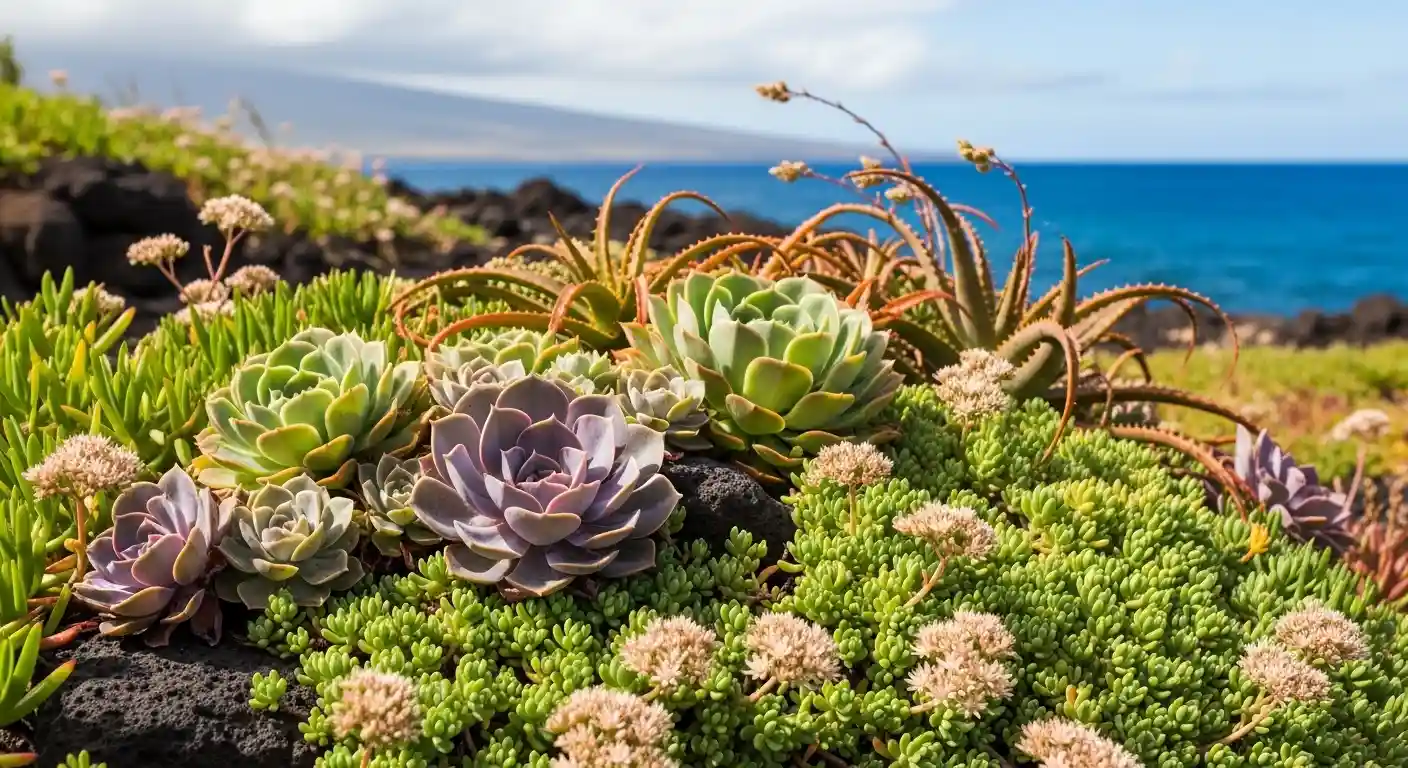

If you’ve ever walked through a Hawaiian garden and spotted a plump, waxy-leaved plant sitting confidently in the sun, you weren’t imagining things. Succulents in Hawaii are more common than most people expect. But growing them here isn’t quite the same as growing them in a dry Arizona backyard. The islands throw a few curveballs — high humidity, heavy rain in certain zones, and volcanic soil — that you need to plan around if you want your succulents to actually flourish.
The good news? With the right approach, succulents don’t just survive in Hawaii. They can genuinely thrive.
Why Growing Succulents in Hawaii Is Different
Most people associate succulents with desert landscapes — think cacti baking under a scorching sun with barely a drop of rain for weeks. Hawaii is basically the opposite of that in many parts. Depending on which island you’re on and which side of it you’re standing, you could be dealing with 15 inches of annual rainfall or over 400.
That variation matters enormously for succulent care.
The dry leeward sides of islands like Maui, Oahu, and the Big Island are significantly more succulent-friendly than the wet windward coasts. If you’re on the Kona side of the Big Island or near Kihei on Maui, you’re in luck. If you’re in Hilo or on the windward side of Oahu, you’ll need to be more strategic.
The Humidity Factor
Even in drier parts of Hawaii, humidity levels tend to stay higher than in mainland desert climates. Succulents store water in their leaves and stems precisely because they evolved in dry environments. When the air itself is consistently moist, the plant’s natural survival mechanism can work against it — leading to root rot, mushy leaves, and fungal issues.
The fix isn’t complicated, but it requires attention to drainage and airflow.
Best Succulent Varieties for Hawaiian Gardens
Not every succulent handles Hawaii’s climate equally. Some are naturally more tolerant of humidity and warmth. Here are the varieties that consistently perform well across the islands:
- Aloe vera — Practically made for Hawaii. Tolerates heat, humidity, and occasional heavy rain. Also useful medicinally.
- Echeveria — Does well in containers with good drainage. Needs protection from prolonged wet seasons.
- Portulacaria afra (Elephant Bush) — Tough, fast-growing, and surprisingly drought-tolerant even in warmer, more humid climates.
- Agave — Handles both dry heat and occasional moisture well. Great for landscape use in leeward zones.
- Sedum — Some varieties adapt nicely to Hawaii’s warmer temperatures, especially in elevated areas with cooler nights.
- Haworthia — One of the best choices for partial shade situations, which can actually help in very bright Hawaiian microclimates.
If you’re just starting out, aloe and agave are your safest bets. They’re widely available at local nurseries across Hawaii and already adapted to the regional conditions.
Block Breaker Original Game: History, Tips & Why It Still Wins
Soil and Drainage: The Make-or-Break Factor
In Hawaii, soil drainage is everything when it comes to succulents. The native volcanic soil can be dense and retain moisture longer than you’d expect. Planting directly into unamended ground is one of the most common mistakes gardeners make here.
What to Use Instead
A well-draining succulent mix is non-negotiable. You can buy pre-mixed cactus and succulent soil from most garden centers, or make your own by combining:
- 50% standard potting mix
- 25% perlite
- 25% coarse sand or pumice
Pumice is especially useful in Hawaii because it’s locally available and does an excellent job of keeping roots aerated even after rainfall.
For in-ground planting, build raised beds or mounded planting areas to help water drain away from the root zone quickly.
Container Growing: A Smart Strategy for Hawaii
One of the most practical approaches for growing succulents in Hawaii — especially on wetter islands or in windward locations — is container gardening. Pots give you control that the ground simply doesn’t.
You can move plants under cover during heavy rain seasons, adjust their sun exposure, and refresh the soil mix as needed. Terracotta pots are particularly useful because the porous material helps wick excess moisture away from the roots.
Just make sure every container has a proper drainage hole. No exceptions. A beautiful pot with no drainage will kill a succulent faster than almost anything else.
Pros and Cons of Growing Succulents in Hawaii
Pros:
- Warm temperatures year-round mean no frost damage
- Long growing season allows for vigorous growth
- Many varieties thrive outdoors without needing to come inside during winter
- Local nurseries stock Hawaii-adapted varieties
- Volcanic pumice makes excellent drainage amendment
Cons:
- High humidity on windward coasts creates root rot risk
- Heavy rainfall in certain zones requires extra planning
- Some delicate varieties struggle with consistent warmth and moisture
- Pests like mealybugs are active year-round in Hawaii’s climate
- Over-watering is an easy mistake when the air already feels wet
Common Mistakes to Avoid
Even experienced gardeners run into trouble with succulents in Hawaii. Here are the mistakes that come up again and again:
Watering too frequently. Just because it’s hot doesn’t mean your succulents need more water. In Hawaii’s humidity, the soil stays moist longer. Always check the soil before watering — it should be completely dry at least an inch down.
Planting in the wrong location. Putting succulents in a low-lying area where water pools after rain is asking for trouble. Always choose elevated spots with good airflow.
Ignoring pest pressure. Mealybugs, scale, and aphids don’t take a winter break in Hawaii. Check your plants regularly and treat early with neem oil or isopropyl alcohol on a cotton swab.
Using the wrong soil. Standard potting mix retains too much moisture for succulents. Always amend heavily or use a dedicated cactus mix.
Planting shade lovers in full sun. Some succulents like haworthia and gasteria prefer bright indirect light. Hawaii’s full afternoon sun can scorch them quickly.
Best Practices for Succulent Success in Hawaii
Follow these practices and you’ll avoid most of the common pitfalls:
- Choose the right microclimate. Leeward, drier locations are ideal. If you’re in a wet zone, commit to containers.
- Water deeply but infrequently. When you do water, soak the soil thoroughly, then let it dry out completely before the next watering.
- Improve drainage before planting. Whether in-ground or in containers, drainage should be your first priority.
- Provide morning sun, afternoon shade. In Hawaii’s intense sun zones, some afternoon protection can prevent leaf scorch on more delicate varieties.
- Use mulch carefully. A light layer of gravel mulch around the base can help with drainage and reduce weed pressure — but keep it away from the stem to avoid rot.
- Repot every 1–2 years. Container-grown succulents benefit from fresh soil regularly, especially in Hawaii’s year-round growing season.
Conclusion
Succulents and Hawaii might not seem like an obvious pairing at first glance, but the islands actually offer a surprisingly good environment for many varieties — as long as you work with the climate rather than against it. Focus on drainage, choose humidity-tolerant species, and be thoughtful about placement. Whether you’re gardening on the dry Kona coast or navigating the wet side of Oahu, there’s a succulent strategy that works for your specific conditions. Start simple, observe how your plants respond, and adjust from there.
Frequently Asked Questions
1. Can succulents survive Hawaii’s rainfall?
Yes, but they need excellent drainage. In high-rainfall areas, container gardening is the most reliable approach. Raised beds with amended soil also work well for in-ground planting.
2. What is the best succulent for beginners in Hawaii?
Aloe vera is the top recommendation. It handles Hawaii’s warmth and occasional humidity better than most succulents and requires minimal maintenance once established.
3. Do succulents need full sun in Hawaii?
Most succulents prefer bright light, but Hawaii’s intense afternoon sun can scorch some varieties. Morning sun with light afternoon shade often produces the best results.
4. How often should I water succulents in Hawaii?
Less often than you might think. Check the soil before every watering — it should be bone dry at least one inch down. In humid areas, you may only need to water every 10–14 days.
5. Can I grow succulents outdoors year-round in Hawaii?
Yes. Hawaii’s frost-free climate is actually a major advantage for succulents. Most varieties can stay outdoors all year, unlike in colder mainland climates where plants must come inside during winter.
